Saving electronics from the scrapheap
Does this sound familiar? Your brand-new wireless earbuds break after using them just a few times. Your washing machine has a fault, but the repair is almost as expensive as buying a new one. Or smartphone software that slows down after a few years, even though the phone itself still works perfectly fine.

This is no coincidence, but the result of a system that thrives on rapid consumption. At Fair Resource Foundation, we are committed to a transition towards a circular electronics chain, in which devices last longer, and producers are held truly responsible for what they place on the market.
The growing mountain of e-waste
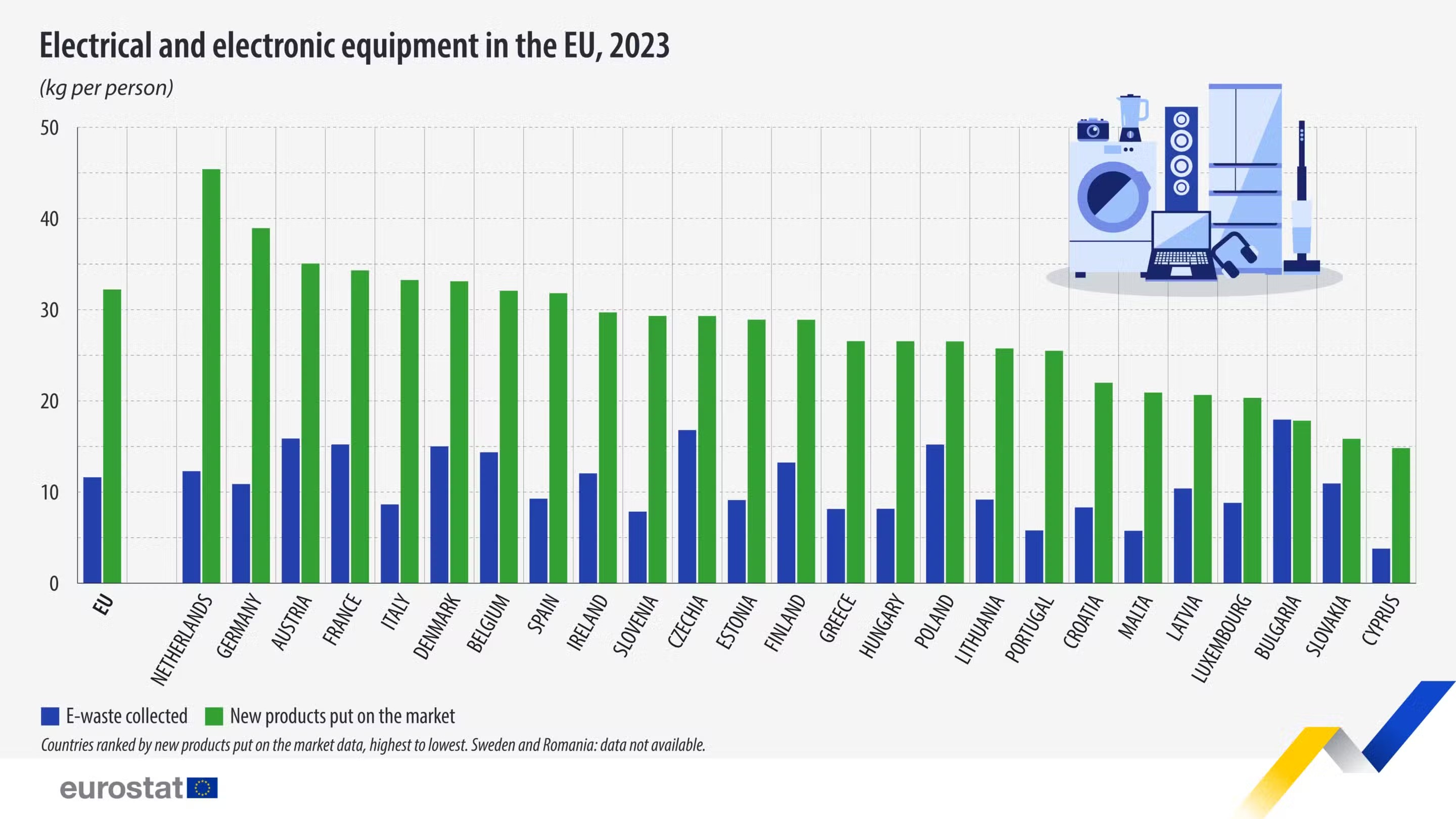
The Netherlands is the European frontrunner in putting electronics on the market (an average of 45 kilos per person). Every Dutch household owns an average of 131 devices. But at the back end we fall short: less than half is collected, whilst e-waste is the fastest growing waste stream in the world.
What we do not collect disappears from view. The extraction of raw materials and the processing of our waste cause enormous damage to the environment and health, mostly outside of Europe.
Current policy - such as the WEEE Directive, the WEEE Regulation and Extended Producer Responsibility (EPR) - falls short: it is too focused on collection and (low-grade) recycling and too little on reducing production, preventing waste and extending lifespan.
Where does it go wrong?
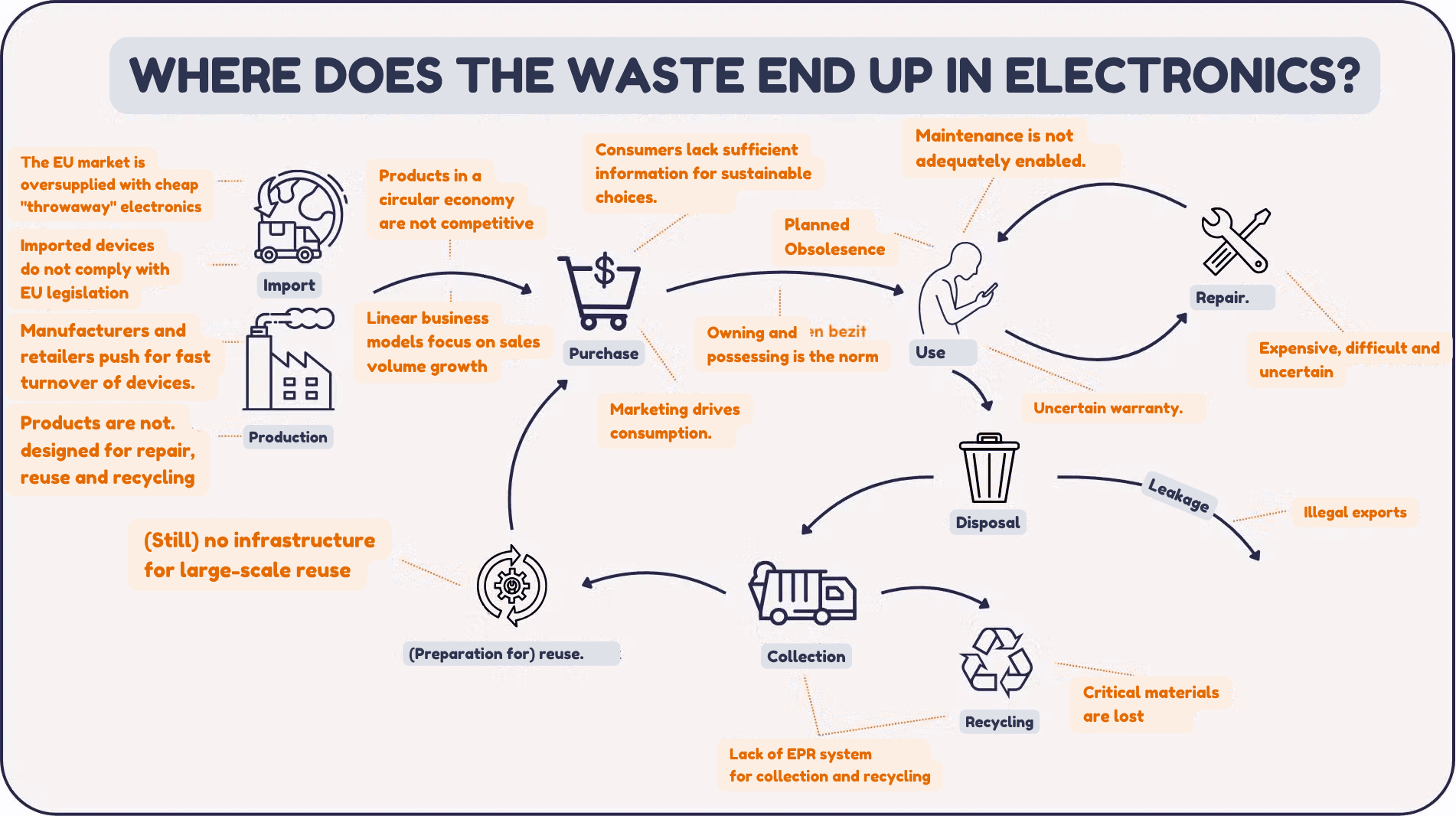
Why is it so attractive to buy the latest iPhone while the previous one still works well? Why is buying a new smartphone often easier and cheaper than repairing it? And why do devices disappear into the shredder before they are reused? To truly address these problems in the chain, we need to understand how the system works. We have mapped out the biggest bottlenecks in the electronics chain.
What needs to be done?
To become circular, the electronics chain must be overhauled. Fair Resource Foundation is committed every day to making these changes a reality in practice as well as in politics. Our main priorities for this transition are as follows:
Making companies pay for waste prevention and enabling reuse (via Extended Producer Responsibility (EPR)).
A ban on disposable electronics, such as birthday cards with music, bicycle lights that break very quickly or glow gadgets at events that you can only use once.
A ban on the destruction of unsold and returned goods.
Mandatory provision of information to consumers at the time of purchase about how long a device is expected to last and its repairability.
Stricter design requirements with a view to circularity (also for software): devices must, for example, be repairable. Software must not be the reason your device stops working.
Repair and reuse must become the easiest options. This requires affordable parts, accessible repair manuals and a network of local repairers and reuse centres.
Strict enforcement and control of electronics that do not comply with rules and standards and of illegal exports.
Collaboration throughout the entire electronics chain.
Our projects
With these projects, we save electronics from the shredder:
Reboot
Together with municipalities and sorters, we want to reuse more electronics through better collection. We are researching how this can be scaled up and financed, for example by also making companies pay for preparing products for reuse once they have become waste (via extended producer responsibility).
REPAIR
Together with the TU Delft Climate Safety & Security Centre and ReLab (Leiden University), we are going to dismantle devices and research the design and repairability of electronics, under the banner REPAIR – Reconfiguring Economies and Practices for Integrated Repair. With this, we want to help designers, companies and policymakers to reduce electronic waste in the transition to a circular economy.