Less empty space, less packaging waste and no more PFAS: FRF welcomes new EU packaging rules
Utrecht, August 2026 – On 12 August, the European Packaging and Packaging Waste Regulation (PPWR) will become applicable in all 27 member states. Fair Resource Foundation (FRF) celebrates this day as the moment when Europe finally begins to turn off the tap on single-use packaging, and sets course towards less packaging and reusable systems.


This page is automatically translated. A human review will follow soon.
Won despite the packaging lobby
Schwizgebel: “But let us be clear: this day should have come sooner, and the measures should have gone further”. When the European Commission first proposed this regulation in November 2022, it was intended to significantly reduce Europe’s record high and still rising packaging waste figures. What followed was one of the most aggressive lobbying campaigns European environmental law has seen in years. What survived the European “trilogues” (consultations between the European Commission, the Council of the EU and the European Parliament) was a smaller and more cautious package of obligations than environmental organisations had fought for – but obligations they are nonetheless.
The fact that prevention, reuse and deposit return schemes remained in the regulation at all is thanks to the persistence of civil society. FRF, together with more than 50 partner organisations across Europe, stood firm for years against the packaging industry's fierce efforts to strip this legislation (March 2023, February 2024, November 2025). The fact that the regulation is applicable today proves that persistent pressure works – and that it must be maintained.
What else can we expect?
With nearly 70 articles, the PPWR is a comprehensive regulation, with targets ranging from prevention, reuse and separate collection to recycling and labelling criteria. Some of the positive changes this new legislation brings include:
PFAS: the end of this “forever chemical”. These per- and polyfluoroalkyl substances (PFAS), which according to the regulation pose “an unacceptable risk to human health” (PPWR, recital 21), are restricted with immediate effect in packaging that envelops our food. A real victory for the health of millions of European consumers, as these chemical substances can end up in our food and are toxic to us (EEA, 2025).
Prevention: more focus on reducing packaging waste at source. For us as consumers, this means no more oversized boxes for our online purchases, less empty space in our packaging, and no more double walls or false bottoms intended solely to give the impression of a larger product volume. A first wave of unnecessary single-use packaging – from miniature toiletries in hotels, packaging around unprocessed fruit and vegetables, to sauces in single portions – will be banned in 2030. A key step towards moving away from endless production.
Reuse: the restoration of systems that the throwaway economy destroyed. From 2030, we should be able to find more reusable packaging options on our supermarket shelves (10% for alcoholic and non-alcoholic beverages), like the beer bottle we still buy by the crate. The same applies to transport and grouped packaging. A modest step compared to the Commission's original plan, but we welcome it nonetheless. It is a step towards bringing back systems most of us still remember from our childhood.
Your own “Bring Your Own” packaging welcome in the hospitality sector: from 12 February 2027, consumers can bring their own containers, and restaurants and cafés will be obliged to accept them at no extra charge. A good way to reduce single-use packaging, at a low cost for the hospitality sector.
Deposit: making it easier to return plastic bottles and cans. Europe is making this system of separate collection, known in Dutch as “statiegeld”, the new norm in Europe, in order to achieve higher and better collection rates for plastic bottles and cans. This also prevents beverage packaging from ending up in streets, rivers or fields.
The end of non-recyclable packaging. The recyclability of packaging will be better assessed, and non-recyclable packaging will be banned from 2030. This makes it easier for us as consumers to choose better packaging. The criteria for this have yet to be established.
The EU is now the first major market in the world to make prevention, reuse, proper recycling and separate collection the norm for the entire European market. This is despite years of industry lobbying to prevent these targets from being set.
There is still work to be done, with secondary legislation yet to be established and successful implementation depending on the commitment of market operators and Member States, but this is a significant step in the right direction.
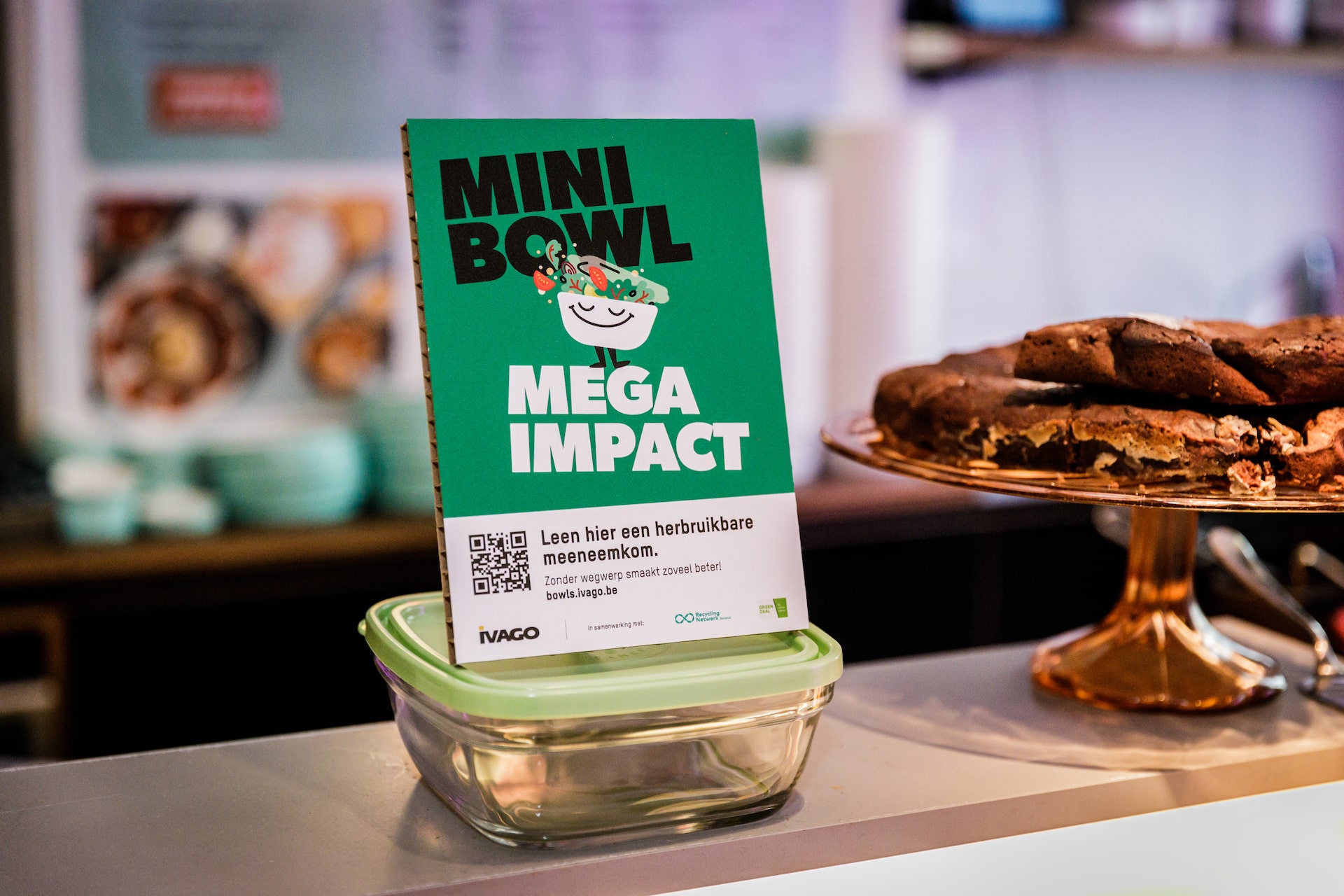
Image: reusable takeaway packaging in Ghent as part of the RSVP initiative “Kombak project”
FRF, together with many other organisations, has been working on the practical implementation of this for years through projects such as Mission Reuse, the Reuse Vanguard Project (RSVP) and, more recently, Circulandia and Interpool. This regulation creates a more level playing field for circular European companies working on sustainable packaging, and promotes the roll-out and implementation of projects of this kind. We need enforceable rules to support circular businesses and the European circular economy. This is also a strong signal inviting other regions to follow Europe's lead.